
"wild arabica"
2000 article(s) found

Ethiopian Coffee Flavor Description Grind Taste Variety Fine Coffee Introduction
In July 1991, EPF hosted a national conference attended by more than 20 political and ethnic organizations. The meeting adopted the Transitional Charter and elected an 87-member House of Representatives, with EPF Chairman Meles Zenawi as President of the Transitional Government and President of the House of Representatives. A transitional government was established. On 24 May 1993, Eritrea (formerly Ethiopian Province of Eritrea) adopted a resolution at the International Conference on the Elimination of All Forms of Discrimination against Women (ICPD).

Taste treatment of Ethiopian Coffee beans Variety Grinding scale Manor
Although the Ethiopian Yirgacheffe coffee is petite, it is gentle and delicate and sweet. As the hometown of coffee, thousands of years of planting history and processing tradition in Ethiopia have created high-quality washed Arabica beans. Light baking has unique sweet aromas of lemon, flowers and honey, soft acidity and citrus flavors, fresh and bright on the palate. No.

Wild taste Yega Xuefei Aduo boutique coffee bean cultivation geographical location, climate, altitude simple
The grading system of Ethiopian coffee is not based on the number of items, but on the proportion of defective beans in raw beans. In October 2009, Ethiopia launched the ECX boutique coffee trading grading system. Through the evaluation of raw beans, Q-Grader made the following grades: washed Yega Xuefei is divided into two grades: Grade 1 and Grade 2, sun Yega Xuefei is divided into Grade 1,

Introduction to the characteristics of the full-grained Yega Sheffiwoca Coffee Flavor Manor in Ethiopia
[product name]: Ethiopia Ethiopia Yirgacheffe [quality rating]: WP Grade 2 [baking]: recommended moderate baking (Medium Roast or City Roast) [grade]: excellent [granule]: ★ full [acidity]: ★★★★ slightly sour, dark chocolate aftertaste [balance]: ★★★★ is very stable

coffee producing areas| Ethiopian Harar Wild Coffee Details
Ethiopia is the world's largest coffee gene pool. As the birthplace of coffee, Ethiopia has nine fine coffee producing areas, rich in coffee varieties, and different coffee producing areas breed different coffee flavors. Ethiopia's nine major producing areas: Yegashefi, Sidama, Hara, Limu, Kimma, Irubaba, Kimbi (Lekanti), Tiebi (Bebeka), Tana

Coffee tree
Coffee trees are evergreen shrubs or trees belonging to the Rubiaceae family. Wild coffee trees can grow to a height of 5 to 10 meters, but coffee trees planted in the manor are often cut to a height of less than 2 meters in order to increase fruit and facilitate harvesting. The opposite leaf of the coffee tree is long oval, the leaf surface is smooth, the end branch is very long, the branch is few, and the flower is white, opening at the base of the petiole connecting the branch.

Arabica coffee beans sour Arabica coffee beans taste soft fruit acid fructose
Professional coffee knowledge exchange more coffee bean information please follow the coffee workshop (Wechat official account cafe_style) front street-Arabica variety introduction Arabica coffee (Arabica) is small fruit coffee, derived from the wild coffee produced in Africa, and then introduced through Arabia to Europe and well-known name. Arabica coffee beans account for 70% of the world's coffee production.

Characteristics of the price of Arabica coffee
Price characteristics of Arabica coffee although there are many kinds of coffee in coffee shops, in the final analysis, there are only two kinds of artificially grown coffee, one is Arabica, the other is Coffea robusta (canephora), both of which are introduced from wild species. But its resistance to dryness, frost, diseases and insect pests is low, especially to coffee's biggest natural enemy.

Yemen Mocha Mattari Information Coffee Growing Process Flavor Features Introduction
Professional barista exchanges, please pay attention to coffee workshop (Weixin Official Accounts cafe_style). As long as Yemeni coffee is mentioned, it is immediately reminiscent of thick and wild sun beans. Yemeni coffee has a long history. Arabica beans were introduced from the Hara region of Ethiopia in the 6th century. Since ancient times, Yemeni coffee farmers have been following the ancient methods handed down by their ancestors. Due to the terrain,
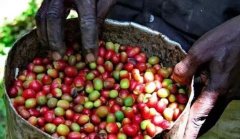
Birthplace of Coffee | know the raw beans of Ethiopia
For professional baristas, please follow the coffee workshop (Wechat official account cafe_style) Ethiopia is the birthplace of Arabica coffee. According to research, wild Arabica grows in the forests of the Kaffa region of Ethiopia. Ethiopians have been drinking coffee longer than anyone else. Coffee is an essential drink in the daily life of the people, and about 50% of the output is mentioned.

The variety [Caturra] Katura and its variety evolved from Arabica species
Exchange of professional baristas Please pay attention to Coffee Workshop (Wechat official account cafe_style) A single gene natural mutation of [Caturra] Katula Red Bourbon, a single gene dwarf green-top variety evolved from the Arabica species, with 50006000 plants per hectare, no shading, small beans, and higher yield than Bourbon. It was first discovered in Brazil in 1937 and in Minas Ger in Brazil in 1937.

A brief introduction to the market price of Yega Xuefei Aduodou boutique coffee bean varieties with wild taste
There is a strict standard for collecting red fruits (as a result of coffee trees). Before exposure to coffee fruits, unripe green fruits or defective fruits are removed manually, and damaged or moldy fruits are removed during the sun drying process. after two weeks, the flesh sugar and essence seeped into the coffee beans, the water content was reduced to 12%, and then scraped off the hardened pulp, pectin layer and pods with a planer to remove the coffee.

Taste wild boutique Burundian coffee flavor description, taste characteristics, treatment methods
[Bulongdi Champion processing Plant] is located at the Maerdadi Peak of the Panjia processing Plant in Cabuye District, Kajanza Province. It is very high above sea level, and there are even mountains over 2000 meters. The soil is fertile, the soil is humid, and the coffee grows very well. Burundian Coffee, which is recognized as the best coffee processing factory in Burundi, bears a striking resemblance to neighboring Rwanda, where coffee is often produced.

What is the flavor of Kopi Luwak? what are the taste characteristics of Kopi Luwak?
Professional coffee knowledge exchange more coffee bean information please follow the coffee workshop (Wechat official account cafe_style) so what is the taste of this famous Kopi Luwak? First of all, let's talk about its beans. Since the range of activities of wild musk cats is at low and middle elevations, most of the coffee varieties are robusta beans, while Arabica beans at high elevations
Ethiopian Coffee Encyclopedia
The coffee tree originated in Ethiopia, it was originally a wild plant here, and the name coffee comes from the small town of Ethiopia-Kaffa. In fact, many coffee trees in Ethiopia are still wild plants, and the coffee grown on this coffee tree is full-grained and slightly alcoholic. Ethiopia Harra in Ethiopia a long time ago, wild coffee was always raw.

How much is a box of Indonesian civet coffee beans? How to authenticate the origin of Kopi Luwak?
Professional coffee knowledge exchange more coffee bean information please follow the coffee workshop (Wechat official account cafe_style) civet coffee _ Indonesia Kopi Luwak _ civet coffee price boutique coffee beans first come to know civet coffee the Indonesian language of civet coffee is KOPI LUWAK, the English name is Civet Coffee, where Kopi is coffee and Luwak is civet.

Introduction to the altitude of planting Environment in Yunnan Tieka Coffee planting Manor
Bourbon: this variety is derived from the iron pickup and was expanded by the French in 1708 on the island of Bourbon (now known as Reunion). Bobang also has a beautiful aroma and rich taste, higher yield and growth than iron pickup, suitable for planting in an area of 12002000 meters, but less resistant to diseases and pests, and more sensitive to strong winds and heavy precipitation. Wave

Raw beans of Ethiopian Sidamo Coffee treated with Water washing G2 Grade imported Coffee unbaked beans
Today, there are still a large number of wild Arabica coffee trees growing in many parts of Ethiopia, averaging between 4200 and 6800 feet above sea level. Now there is a trend of small cultivation, generally planting banana trees for shade at the same time, but due to lack of agricultural technology, herbicides and pesticides are less used. Coffee is Ethiopia's main economic crop and the largest in the country.
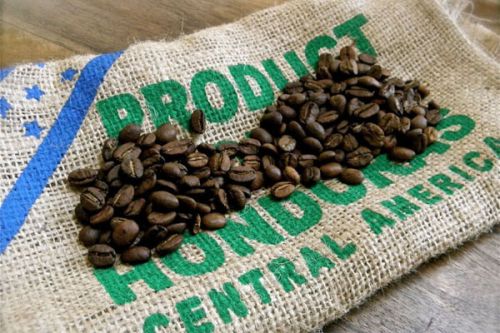
Is Ethiopia sidamo Sidamo G2 Robusta or Arabica? Coffee beans
Coffee has more than a hundred varieties of coffee, the more common coffee are: Arabica Arabica, outstanding personality, unique flavor, is the main force of boutique coffee, mainly used for coffee shop management and high-end coffee market supply; Robusta Robusta, rough flavor, high caffeine content, not boutique coffee, often used for instant coffee processing and Italian coffee mixed beans. Ethiopia Typi

A brief introduction to the Market Price of High-quality and pollution-free Ugandan Fine Coffee Bean varieties
Uganda is the country of origin of coffee grown in Robusta, but commercial cultivation of Arabica species here did not begin until early 1900. Today, there are still a large number of wild robusta coffee trees in Uganda, which is rare in cities in the world. As a landlocked country, the large coffee cultivation in Uganda is often interplanted, where coffee trees are mixed with food crops and rubber trees.